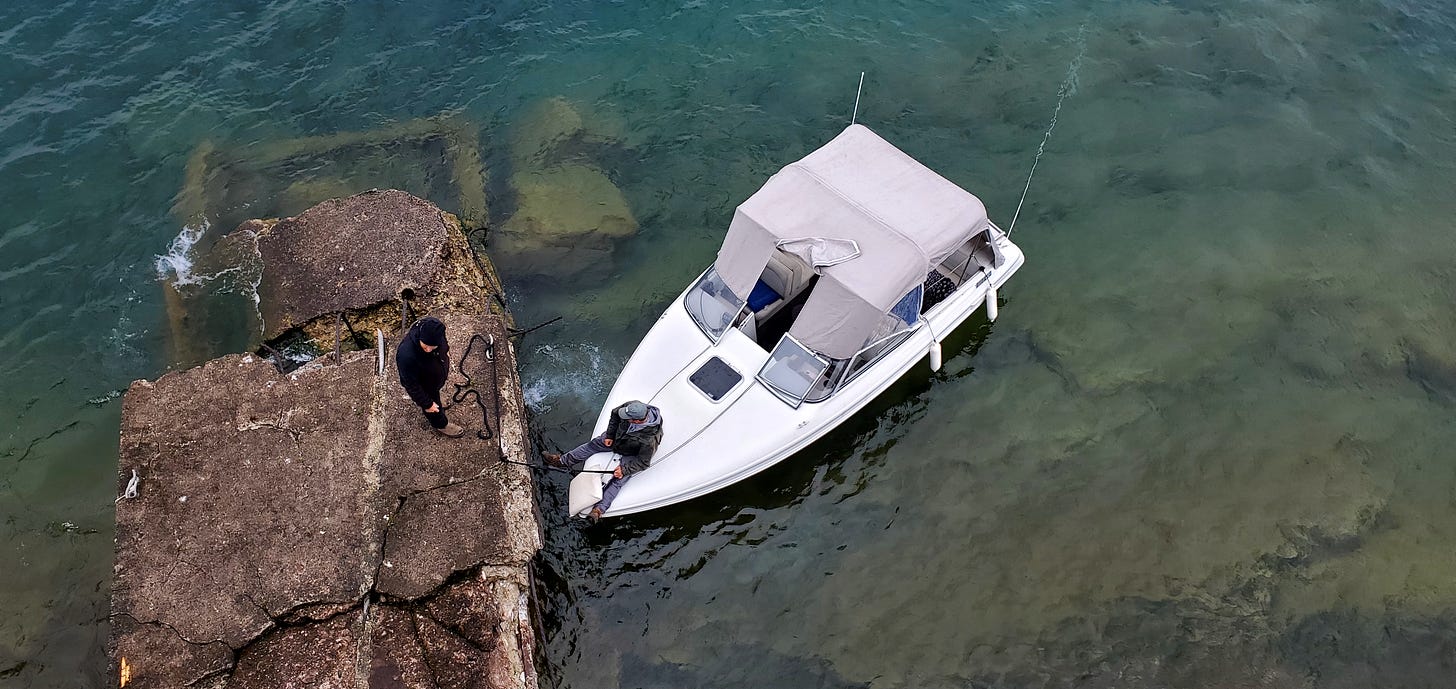
This is the first in a series of posts about the restoration and preservation of the Rock of Ages Lighthouse, along with the proposal to restore and preserve the other historical sites in Isle Royale’s Washington Harbor. In this post, I question the likelihood of making a restored lighthouse accessible to the public in a sustainable future.
To understand the nature of the challenge, I’d like to share the story of a fictional character who dreams of visiting and exploring the famous navigational aid located five miles off the coast of one of the least visited and most isolated National Parks in the country.
Abigail Larson, Abby for short, read about the lighthouse in a regional magazine, sparking her interest because of the way it was described.
The Rock of Ages Lighthouse represents the heroic era of lighthouse keeping, the technological progress of early 20th-century navigation, and the lasting human effort to conquer the dangers of the Great Lakes. It stands on a small, exposed rock outcropping west of the wilderness archipelago of Isle Royale — an area notorious for shipwrecks due to submerged reefs and unpredictable weather.
Reading further, she learned about the remoteness of Isle Royale and the lighthouse, as well as how the National Park was the least visited of all the National Parks in the country.
It sounded very interesting and like a challenge suited to her adventurous nature. Her research suggested a number of roadblocks, however. Access to the western side of Isle Royale was either by the two ferries operating out of Grand Portage, Minnesota, in the far northeastern part of the state, only a few short miles from Canada, or by the National Park Service boat Ranger III, operating out of Houghton, Michigan. The Ranger III only visited Washington Harbor once a month, and Houghton was a very long drive from her home in Minneapolis. Grand Portage was nearer, but reservations on those boats usually filled up before the summer season even started. Planning ahead was going to be essential.
Another slight roadblock was that the lighthouse was not open to the public, and even if it were, it could only be accessed by a small boat. Another option was to pass by it on the ferry, if the weather cooperated and the ferry operator had favorable seas, leaving that option to chance.
She discussed her findings with her favorite adventure travel partner, Sarah.
“The park is tough to get to, and we’d have to decide now, when the snow is still flying, to make reservations. But it’s so remote and wild, and the lighthouse seems forbidding, that if we could manage it, it would make for a great travelogue,” Abby said.
“Yeah, but you know I’m not much of a hiker, and the camping seems a little limited. What would we do if we couldn’t get out to the lighthouse?” Sarah replied.
“I learned that one of the ferry boats makes day trips to Windigo, the visitor center at the west end of the island. And that they rent fishing boats with motors at the concession store. We could get out there, rent a boat, motor to the lighthouse, take a look around, and return to the ferry and back to the mainland that afternoon.”
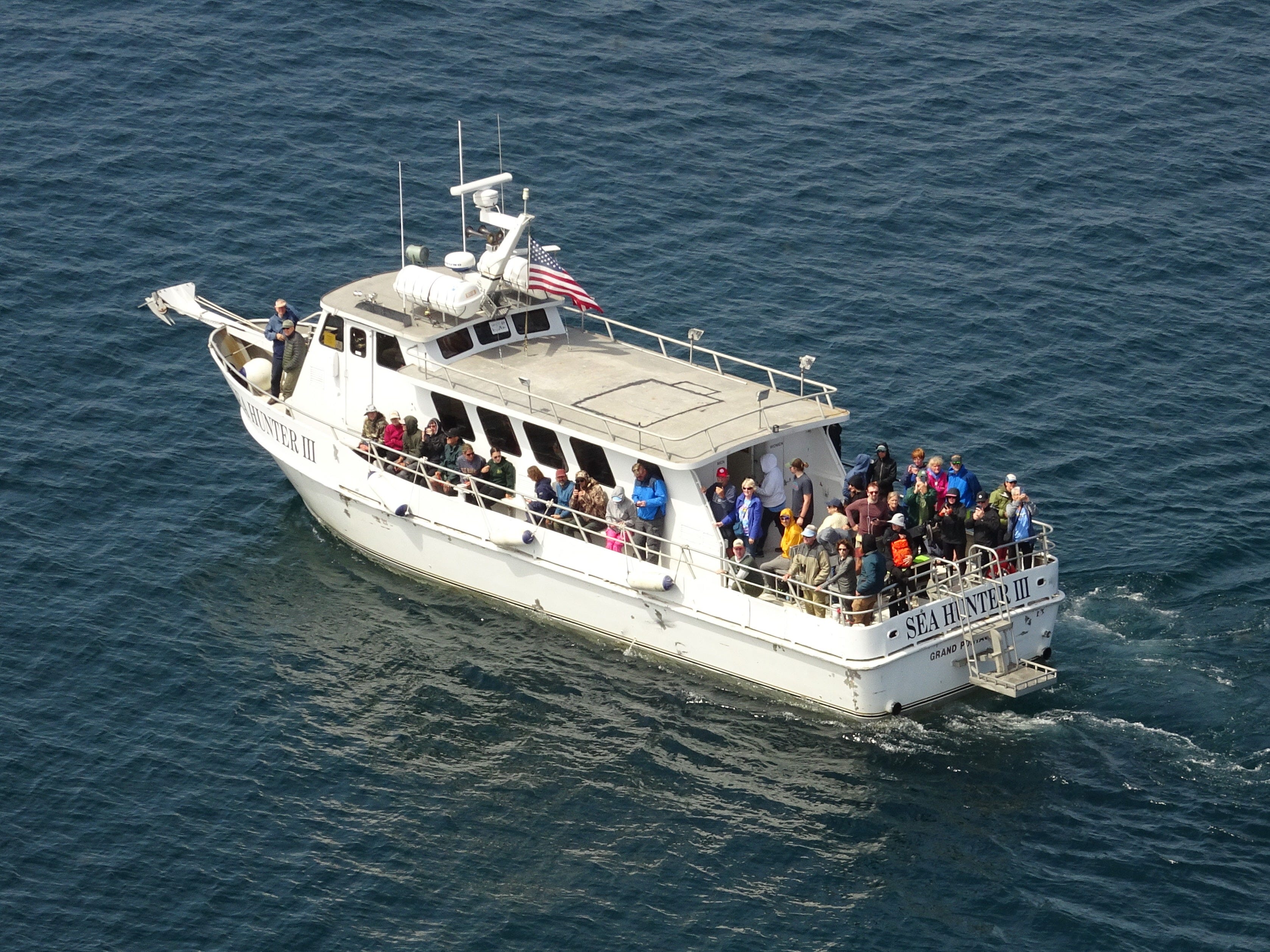
Several months later, arriving at the beautiful new boat dock and event center, compliments of the Grand Portage Band of the Lake Superior Chippewa, they checked in with the crew of the Sea Hunter ferry boat. Having just learned about some of the Indian heritage and the historical fur trading of the region at the Grand Portage National Monument, Anne and Sarah were excited to explore more history. As they climbed aboard, they observed some of their fellow passengers. Some did not seem prepared for the wilderness or history, with some walking in high heels and some wearing light shirts and slacks. Others looked like some of the fur traders they had read about in the Monument. Apparently, those on a wilderness adventure shared the boat with those planning to stick pretty close to the dock.
The trip across to Washington Harbor left many reaching for the rails. A stiff wind sent waves at a quarter of the bow, pitching the 65-foot boat to a fro. Some passengers had to endure the spray, since they were relegated to the bow seating. The Windigo visitor center dock, recently renamed Ozaagaateng, was a welcome landing for all. It left Abby and Sarah wondering if they would still be able to boat to the lighthouse, and not at all anxious for the return trip.
“Hi there. We were wondering if we could rent one of your boats for two or three hours,” Abby asked the lady at the cash register of the Washington Harbor Store, a place for basic souvenirs and typical convenience store food items.
“Sure, do you want fishing gear with that,” she asked, “or will you be sightseeing?”
“We’re planning to just go out to the lighthouse for a peek,” Sarah said.
“The lighthouse?” the attendant replied with a furrowed brow. “That’s not allowed, and not a very good idea in any case.”
“Why not?” Abby asked.
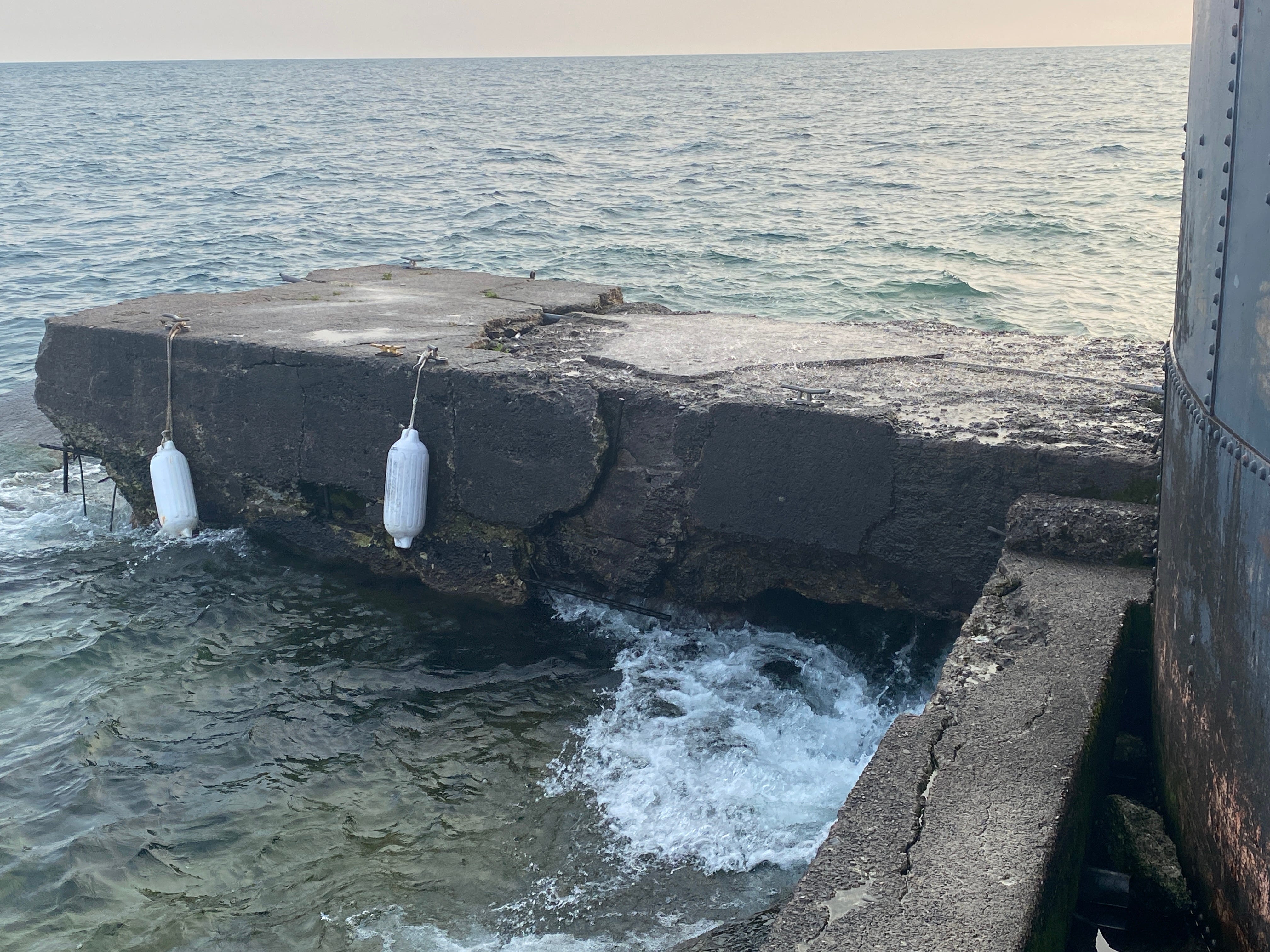
“Well, for one, you’ve got about five miles of unprotected open water from the end of the harbor to the lighthouse. You’ve just seen what that water does to a ferry boat today, let alone a sixteen-foot open fishing boat. Secondly, the dock at the light is pretty much broken up — a real hazard. Our boats are limited to staying within the harbor, and not just to placate the lawyers, but for the safety of our guests.”
The disappointment was written all over their faces. “Well, is there anything else to see in the harbor, anything historic?” Abby asked.
“By boat - not officially. The limit is just before the shipwreck of The America, though some folks cross the line to take a peek anyway. Just beyond that, but well beyond the limits, are the historic fishing camps and cabins on Barnum and Washington Islands, but, again, not permitted.”
“What about on foot?” asked Sarah. “Anything to do here?”
“Well, you could go down and walk through the campground. A moose can often be found foraging in the creek there. Or there’s a short nature trail behind the visitor center. Or you could go swimming off the dock,” she smiled.
Abby returned to the mainland with only a stamp in her National Parks Passport and a t-shirt to show for the trip — not quite what she had imagined.
About two thousand visitors take that trip to Windigo each year. We see most of them loitering around the general store, the pavilion, or the dock halfway through their visit, around noon to 1:00 p.m.. A visit to the lighthouse is not on their mind, and even if it were, there would be nothing they could do about it. That leaves the handful of boaters with their own transportation as potential lighthouse visitors. Hardly enough to justify investment in interpretive displays, maintenance, or a docent staff living on the lighthouse.
What would it take to create an accessible destination with enough to see or do to make it worth the challenges involved in getting to the most inaccessible of National Parks in the country? Well, I have some ideas that I’ll get to in this series. Stay tuned.
Comments
Post a Comment