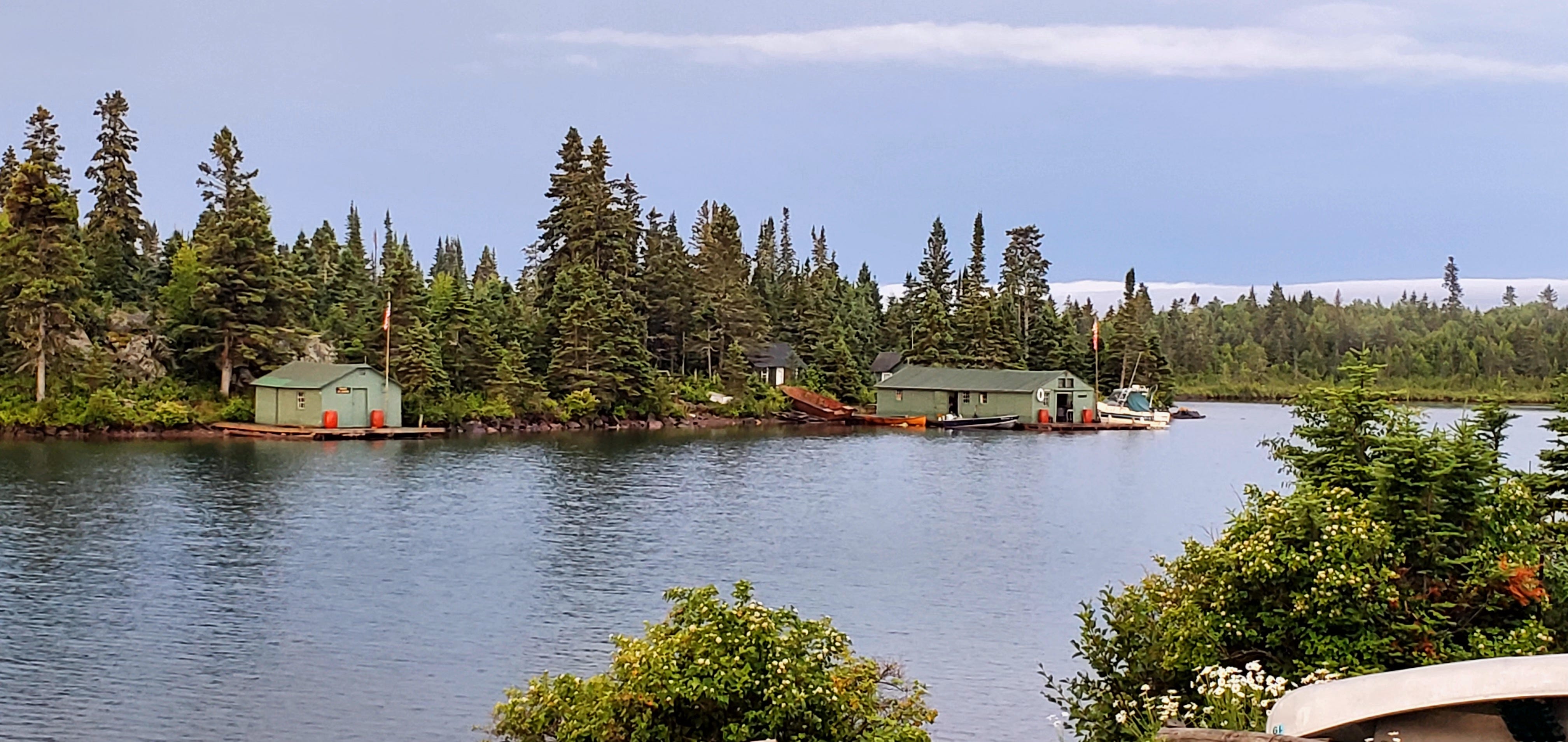
The goal is ambitious but achievable: transform the western end of Isle Royale, particularly Washington Harbor and the Rock of Ages Lighthouse, into a world-class destination for living cultural and historical interpretation, comparable in quality and visitor experience to the best maritime heritage sites in the Great Lakes.
So, how do we elevate things to a level sufficient to achieve this vision? In my experience, a successful blueprint can be found in the Rock of Ages Lighthouse Preservation Society (ROALPS).
ROALPS has demonstrated a highly effective partnership with Isle Royale National Park (ISRO). Through coordinated fundraising, volunteer recruitment, project planning, and restoration work conducted under Park oversight, the organization consistently delivers results while maintaining full compliance with Park policies and preservation standards. Their work offers a clear model for what success can look like.
What follows is a framework for scaling a similar approach for Washington Harbor. Other necessary components include a direct partnership with Isle Royale National Park, a solution to the transportation limitations, and a marketing strategy for the destination.
A Management Support Organization
Several organizations are serving ISRO with varying degrees of organization and competency. The Washington Harbor Preservation Group is one of them. They arrange for volunteers to work on projects agreed upon with the ISRO Culture Resources Manager and raise funds for some of the necessary materials. But there is no critical mass from which to scale their efforts. Here are some of the other organizations involved directly with ISRO:
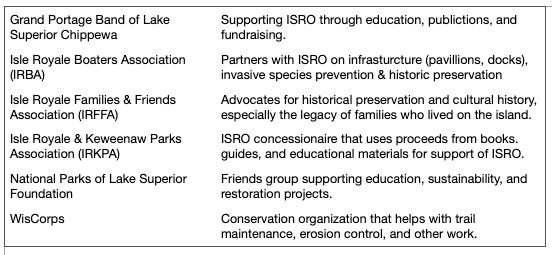
Only the National Parks of Lake Superior Foundation and the Grand Portage Band of Lake Superior Chippewa currently have the capacity to address the scope of this ambition. However, even with these organizations, they’re unable to provide the full range of competencies inherent in the ROALPS model. To do that would require a concerted effort to build out those capabilities in an existing organization or establish a new one.
ROALPS has the capabilities but not the capacity to extend its work beyond the lighthouse. Additionally, ISRO has raised concerns that expanding ROALPS’s role could threaten or divert attention from its primary mission.
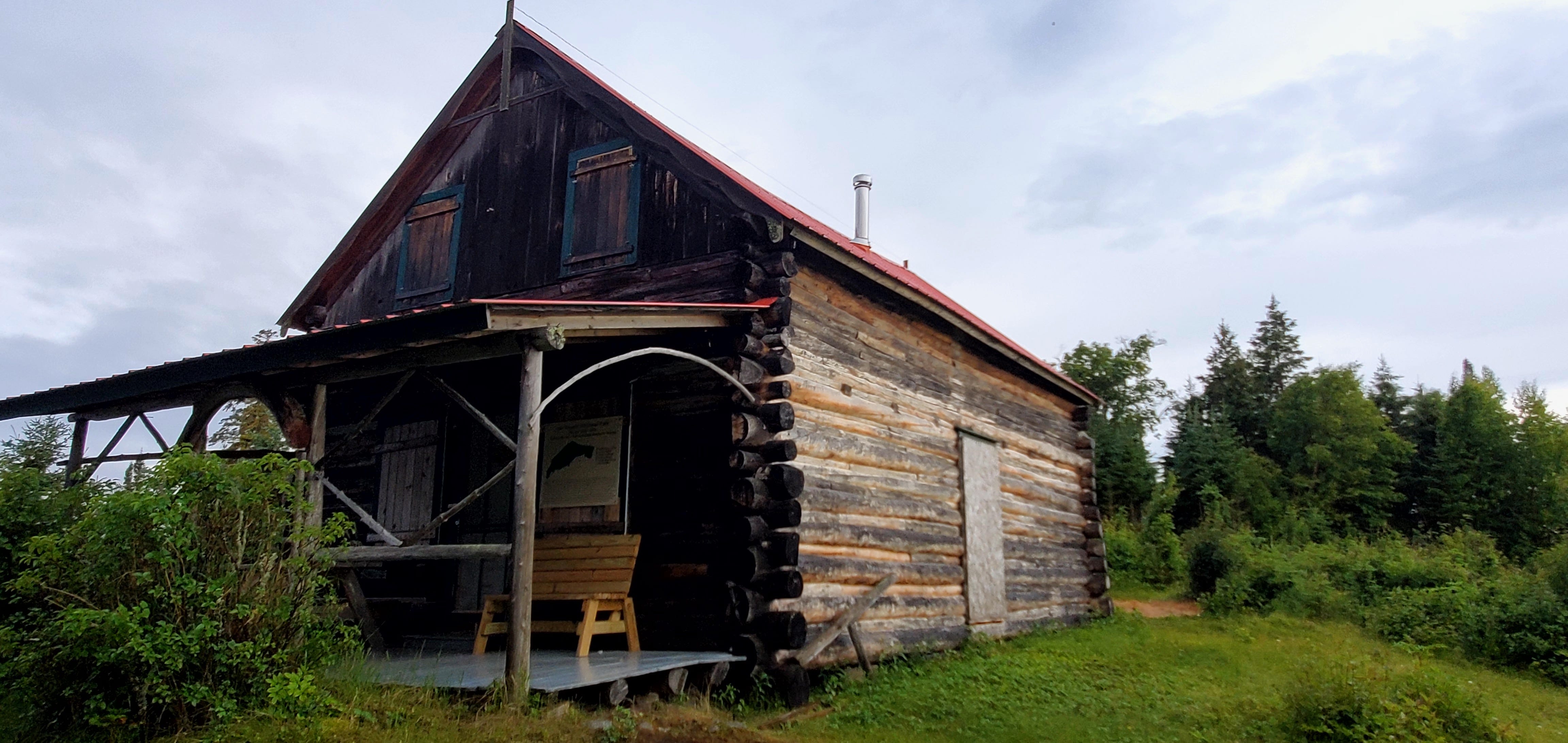
Rather than pre-selecting a lead entity, the most productive path forward is a collaborative one. All stakeholders should be involved in determining how to coordinate and scale support. Included, but not limited to, the Washington Harbor Preservation Group and a group we haven’t discussed yet — the Johns Hotel Historical Point Association. This group consists of descendants of John Johns, an Isle Royale pioneer, mining superintendent, commercial fisherman, and the island’s first resort operator. This group, in cooperation with ISRO, has already restored much of the old Johns Hotel on Barnum Island, with plans to create a historical interpretation program for visitors. Their work could serve as one of two cornerstones of a tourist experience in the harbor, the other being the historic Sivertson Fish House, a recent restoration project of the Washington Harbor Preservation Group.
Any new support structure should strengthen—not replace—existing preservation initiatives. Its role would be to add capacity in areas such as fundraising, administration, project coordination, volunteer management, and compliance training. Especially fundraising. Current preservation groups cannot reach their long-term goals with today’s limited funding. They need access to skilled grant writers, seasoned donor developers, and the infrastructure required to pursue significantly larger restoration investments. To succeed, they need to attract hundreds of thousands of dollars in support, not the low tens of thousands they raise now.
Decisions about preservation standards, priorities, and historical interpretation should be made through collaborative discussions between ISRO and existing groups. Participation of those groups in any support structure should remain optional, not mandatory.
If we could successfully establish the mass and scale of an organization for the Washington Harbor effort, it could provide the framework for an umbrella shared services organization that could serve ISRO and ISRO partnership interests on an island-wide basis, extending beyond just Washington Harbor. The Washington Harbor restoration initiative could be a proving ground.
An Expanded Transportation Service
Currently, ferry service to the west end of Isle Royale is provided under a concession contract with Grand Portage Isle Royale Transportation Lines. They operate two boats out of the Hat Point Ferry Terminal in Grand Portage: the Voyageur for service around the entire island, starting and ending with Washington Harbor; and the Sea Hunter III for out-and-back day trips to the harbor. In fair weather, the Sea Hunter III does a ‘drive-by’ of the America shipwreck on the way in (still visible beneath the surface of the water), and the Rock of Ages lighthouse on the way back to Grand Portage. In the past, they also operated charter trips for lighthouse aficionados directly to and from the lighthouse, although this is no longer possible due to Park constraints. Sea Hunter III also operates only on weekends in June and on Thursdays through Sundays in July and August.
If dockage in the harbor and at the lighthouse were improved, perhaps Sea Hunter III’s service could be expanded to include transportation to and from the Ozaagaateng dock to those locations for interested visitors. Or scheduled trips directly to those locations could be established on off days from their current schedule.
Alternatively, a shuttle service could be established, based out of the concessioner docks at Ozaagaateng, operated either by the GPIR Transportation Line or by the existing Isle Royale concessionaire, Aramark Destinations, the current operator of the MV Sandy shuttle out of Rock Harbor.
Barring those two options, perhaps an independent shuttle service could be established under a separate concession contract, or under the umbrella of the shared services organization or ROALPS.
Evidence of the potential economic viability of these approaches can be found at the Apostle Islands National Lakeshore through the concessioner services of Apostle Island Cruises. They operate three boats — including a new, fast, custom-built 65’ catamaran — accommodating up to 700 guests per day with multiple tour options.
A Destination Marketing Strategy
To build a visitor population to a degree sufficient to justify transportation investment requires some proactive packaging and communication of the opportunity. One such package could retain the benefit of a day trip, and yet enhance the experience enough to draw folks from the Twin Cities of Minnesota, downstate Wisconsin, and the greater Chicago area, expressly for the purpose of visiting the island to tour its cultural heritage, in addition to sites along the Minnesota north shore.
Such a tour would include a stop at the Grand Portage National Monument, which features its own heritage center, where visitors can explore the partnership between the Anishinaabe and the North West Company during the fur-trading era. Then on to the ferry dock for the trip to Isle Royale, with stops at Washington Harbor and the Rock of Ages Lighthouse for interpretive tours. All within a day. Lodging at the Grand Portage Lodge, Hollow Rock Cabins, or Naniboujou Lodge could be included for a multi-day stay, further increasing the economic benefit to the region. This could be communicated and arranged by either the Grand Portage Band — owners of the Lodge and Hollow Rock — the Management Support Organization, or a third-party travel company.
Custom itineraries could also be marketed to interest groups such as the United States Lighthouse Society, the Great Lakes Lighthouse Keepers Association, and the Great Lakes Fisheries Heritage Trail—reviving and expanding on previous charter offerings while reducing the Park's operational burden through advance registration.
Shopping an Idea
Where to go from this outline of a concept? This posting begins a winter season of shopping the idea to stakeholders and interested parties. The way I’d summarize it in short:
Washington Harbor has the potential to become a unified cultural destination within Isle Royale National Park, centered on historic assets such as the Rock of Ages Lighthouse, the Johns Hotel, and the Sivertson Fish House. Achieving this vision requires strengthening support structures, improving transportation access, and effectively marketing the experience.
This strategy builds on the proven ROALPS model of coordinated fundraising, volunteer management, project management, and close partnership with ISRO. A shared-services management organization would augment—not replace—existing groups by providing these administrative capacity elements.
I’d welcome any reactions or suggestions in the comments section.
Postscript
Some family members pointed out that my last few posts didn’t exactly read like my usual “What I did on my summer vacation” narrative. They said the most recent one, especially, sounded more like a grant proposal—and they’re not wrong.
The reason is simple: this time I’m writing with a broader audience in mind. I’m hoping to spark interest and conversation among the stakeholders I’ve invited into this discussion, as well as any curious reader who happens to wander in. If you’ve made it this far, I truly welcome your thoughts—whether you want to jump into the comments or reach out privately by email.
Comments
Post a Comment